


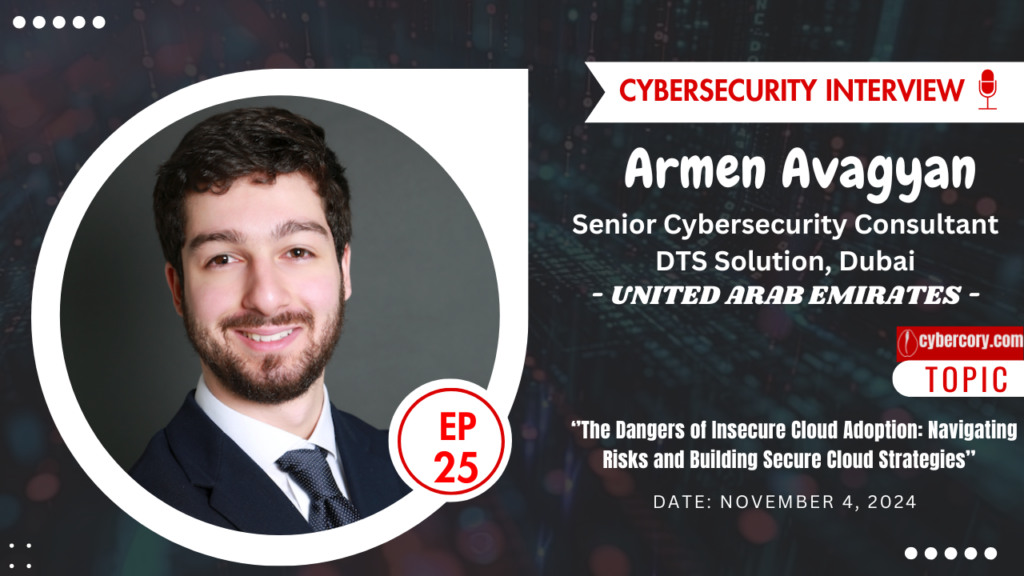
As organizations race to adopt cloud technologies, the advantages of scalability, flexibility, and cost- efficiency are clear. However, rapid cloud adoption without the proper security measures can expose businesses to significant risks. From data breaches to misconfigurations and compliance failures, insecure cloud environments are an attractive target for cybercriminals. In this interview, we explore the risks associated with insecure cloud adoption, how organizations can protect their critical assets, and the best practices for implementing a secure cloud strategy. Our expert guest will share their insights on how to navigate these challenges and build a resilient cloud infrastructure that safeguards against emerging threats.
Biography: Armen Avagyan
With a strong foundation in cybersecurity, I have over eight years of experience specializing in the assessment, design, and implementation of security solutions and architecture tailored for a wide range of industries. Currently, I am a Senior Cybersecurity Consultant, where I focus on protecting digital assets and securing complex IT / OT environments. My expertise spans areas such as cloud security, compliance assessment, incident response, secure integration of AI and ML technologies into business processes, etc.
The Interview:
- Introduction and Expert Background
- Can you tell us about your background in cloud security and how you became involved in helping organizations mitigate cloud adoption risks?
I’ve spent a significant part of my career in cybersecurity, specializing in cloud security. Over the years, I’ve had the opportunity to work closely with organizations, helping them navigate the complexities of cloud adoption. My journey into cloud security was a natural progression as more businesses moved their operations to the cloud. Recognizing the potential risks associated with this shift, I focused on developing strategies that help secure cloud infrastructures, ensuring that clients not only adopt the cloud efficiently but also securely.
2. What are some of the most common misconceptions businesses have about cloud security?
A common misconception is that once a company moves to the cloud, the cloud provider takes care of all aspects of security. In reality, security is a shared responsibility between the provider and the customer. Another myth is that cloud environments are inherently less secure than on- premises setups. With the right configurations and security measures, the cloud can often be more secure than traditional environments.
B. Understanding the Risks of Insecure Cloud Adoption
3. What are the primary security risks organizations face when adopting cloud services without sufficient security measures?
- The primary risks include data breaches due to misconfigurations, unauthorized access due to weak identity and access management, and exposure to vulnerabilities if security patches aren’t applied promptly. When security isn’t a priority from the start, organizations are vulnerable to attacks targeting these weaknesses.
4. Why do you think insecure cloud configurations are among the leading causes of data breaches today?
- Misconfigurations often happen due to a lack of understanding of cloud services or the rush to deploy without proper security checks. Many breaches occur because sensitive data is accidentally exposed to the public, such as leaving storage buckets open or failing to properly secure databases. This highlights the need for security training and automated tools that detect misconfigurations.
5. Can you discuss how cloud adoption impacts the traditional security perimeter and the challenges this creates for organizations?
- Traditional security relied heavily on a well-defined perimeter, but cloud adoption has blurred these boundaries. With resources hosted outside the physical premises, it becomes crucial to secure data in transit and at rest, and to manage access controls effectively. This shift requires organizations to rethink their security strategies, embracing models like Zero Trust.
C. Common Vulnerabilities in Cloud Environments
6. What are the most frequent vulnerabilities you’ve seen in cloud deployments, and how can they be mitigated?
- Some of the most common vulnerabilities include open storage buckets, exposed management ports, and weak access controls. To mitigate these, organizations should use encryption, implement multi-factor authentication, and regularly audit their cloud environment to catch and fix misconfigurations.
7. How do issues like insufficient identity and access management, unpatched vulnerabilities, and weak encryption contribute to cloud-related breaches?
- Without proper identity management, attackers can easily gain unauthorized access, especially if users have excessive privileges. Unpatched vulnerabilities provide entry points for attackers, and weak encryption makes data in transit and at rest easy to intercept. Addressing these areas with a proactive approach can significantly reduce risks.
8. How can misconfigurations in cloud infrastructure lead to severe security incidents, and what steps should be taken to avoid them?
- Misconfigurations can expose entire databases or critical resources to the internet, leading to data breaches. Regular security assessments, continuous monitoring tools, and implementing security best practices from the start can help prevent such issues.
8. How can misconfigurations in cloud infrastructure lead to severe security incidents, and what steps should be taken to avoid them?
• Misconfigurations can expose entire databases or critical resources to the internet, leading to data breaches. Regular security assessments, continuous monitoring tools, and implementing security best practices from the start can help prevent such issues.
D. Data Security and Compliance in the Cloud
9. How do insecure cloud environments impact data privacy and compliance with regulatory frameworks like GDRP, HIPAA, PCIDSS, CCPA, Etc.?
- Insecure environments can lead to unauthorized data access, putting companies at risk of violating privacy regulations like GDPR or HIPAA. This can result in hefty fines and loss of customer trust. Ensuring encryption, proper data handling procedures, and continuous compliance checks are key to maintaining regulatory compliance.
10. What are the biggest challenges for organizations when ensuring that their cloud deployments comply with industry regulations?
- One of the main challenges is understanding how regulatory requirements translate into cloud settings. The dynamic nature of the cloud requires constant monitoring and adjustments to stay compliant. Additionally, ensuring that third-party service providers meet these standards can be challenging.
11. How can organizations maintain control over sensitive data when working with third-party cloud providers?
- It’s essential to define clear data governance policies and conduct due diligence when selecting cloud providers. Using encryption, managing keys internally, and maintaining strict access controls are also effective ways to ensure that data remains protected.
E. The Role of Shared Responsibility in Cloud Security
12. Can you explain the concept of the shared responsibility model in cloud security and why it’s often misunderstood?
- The shared responsibility model divides security tasks between the cloud provider and the customer. While the provider secures the infrastructure, the customer is responsible for securing their data, applications, and user access. The confusion often comes from a lack of clarity around where the provider’s responsibilities end and the customer’s begin.
13. What security responsibilities fall on the cloud service provider versus the customer, and how can organizations ensure they are fulfilling their part?
- Providers handle the security of the cloud (physical infrastructure, network, etc.), while customers are responsible for securing what’s in the cloud (data, identity, configurations). Organizations should understand this model clearly, set up proper configurations, and continuously audit their environment.
F. Best Practices for Secure Cloud Adoption
14. What are the best practices for organizations to follow when adopting cloud services securely?
- Start with a security-first mindset, implement identity and access management policies, use encryption, and regularly audit configurations. Training staff on cloud security basics is also essential to avoid common pitfalls.
15. How important is a “Zero Trust” approach in securing cloud environments, and how can companies implement it effectively?
- Zero Trust is crucial in cloud security because it assumes that no user or system is trusted by default. Implementing it requires segmenting networks, applying least privilege principles, and constantly verifying user identities and device compliance.
16. How can organizations incorporate cloud security from the very beginning of their adoption process to avoid the dangers of insecure deployment?
- Organizations should integrate security into the design phase, perform thorough risk assessments, and adopt a DevSecOps approach where security is embedded throughout the development and deployment lifecycle.
G. Cloud Security Tools and Technologies
17. What security tools and technologies are essential for securing cloud environments, and how do they help in mitigating risks?
- Tools like cloud access security brokers (CASBs), encryption services, and SIEM solutions are vital for visibility and control. They help detect threats, enforce policies, and ensure compliance across multi-cloud environments.
18. How do AI and machine learning play a role in cloud security, particularly in threat detection and incident response?
- AI and ML can analyze vast amounts of data to detect anomalies and predict potential threats. This speeds up incident detection and response, helping security teams to act quickly against emerging threats.
18. How do AI and machine learning play a role in cloud security, particularly in threat detection and incident response?
- AI and ML can analyze vast amounts of data to detect anomalies and predict potential threats. This speeds up incident detection and response, helping security teams to act quickly against emerging threats.
19. Are there any cloud security trends or technologies that organizations should pay attention to in the coming years?
- Secure Access Service Edge (SASE), AI-driven threat detection, and advancements in Zero Trust frameworks are some of the key trends. As more companies adopt multi-cloud strategies, managing cross-platform security will also become a priority.
H. Incident Response and Cloud Security
20. How should organizations prepare for and respond to cloud-based security incidents?
- They should have a robust incident response plan that includes clear roles, rapid communication protocols, and automated tools to contain and remediate breaches. Regular tabletop exercises can also ensure readiness.
21. Can you share an example of a cloud security breach that could have been prevented with better security measures, and what lessons can be learned from it?
- A notable example is when sensitive data was exposed due to an open storage bucket. This incident could have been prevented with proper access controls and continuous monitoring. The lesson here is that simple misconfigurations can have massive consequences.
I. The Future of Cloud Security
22. As cloud technology continues to evolve, what do you think are the key security challenges organizations will face in the next 3-5 years?
- The rise of AI, IoT, and multi-cloud environments will introduce new challenges around data privacy, interoperability, and identity management. Managing the complexity of hybrid deployments will also be a significant hurdle.
23. How can businesses stay ahead of emerging threats in cloud environments, and what steps can they take to future-proof their cloud security strategies?
- Investing in continuous training, adopting a proactive security culture, and leveraging advanced threat detection tools are key. Additionally, working closely with cloud providers to understand new security features can keep businesses ahead of the curve.
Closing Note:
Thank you for your valuable insights into the dangers of insecure cloud adoption and the steps organizations can take to protect themselves. It’s clear that while the cloud offers numerous benefits, the risks must be carefully managed with proactive security strategies.
We truly appreciate your time and expertise in discussing these important topics, and we hope your insights will help organizations build stronger, more secure cloud infrastructures.