


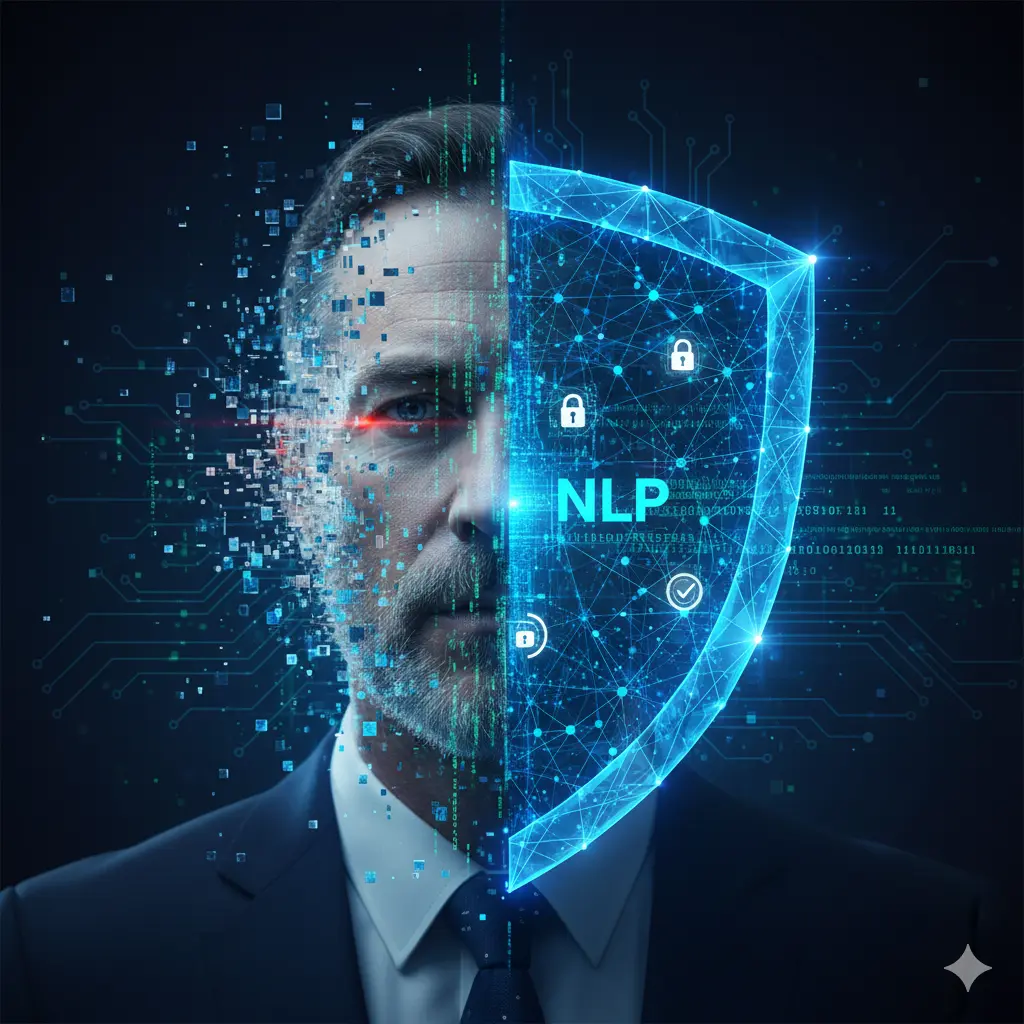
The New Reality: When Your CEO’s Face Becomes a Weapon
In February 2024, a finance worker in Hong Kong joined what appeared to be a routine video conference with the company CFO and several executives. Every face was recognizable. Every voice was authentic. Following their instructions, the employee executed wire transfers totaling $25.6 million. Every single person on that call was a deepfake.
This wasn’t an isolated incident it’s the new frontline of cybersecurity. AI-driven phishing attacks and deepfake fraud have transformed social engineering from a volume game into precision warfare. The FBI reported $2.9 billion in BEC losses in 2023, a 47% increase from 2022. With generative AI now accessible to anyone, experts predict losses will exceed $5 billion by 2026.
Traditional defenses spam filters, employee training, even multi-factor authentication were designed for a pre-AI world. Today’s attackers use large language models (LLMs) to craft psychologically perfect messages, voice cloning from 3-second audio samples, and real-time video deepfakes during live calls. The tools that once required nation-state resources now cost hundreds of dollars and require no technical expertise.
This guide provides the strategies and technologies your organization needs to defend against AI-powered threats through defensive NLP, Zero Trust protocols, and deepfake detection turning security into a competitive advantage.
1. Hyper-Personalized Phishing The End of “Spray and Pray”
What Makes Modern Phishing Unstoppable
Hyper-personalized phishing leverages AI and extensive data mining to create highly targeted communications that exploit specific individuals’ roles, relationships, and psychological vulnerabilities. Unlike traditional phishing’s generic messages, these attacks are surgical strikes built on intimate knowledge of targets.
How AI Scrapes Intelligence at Scale:
Attackers use automated OSINT (Open Source Intelligence) tools powered by LLMs to build comprehensive profiles in minutes:
- LinkedIn reveals: Organizational hierarchy, reporting structures, current projects, and professional relationships
- Social media exposes: Real-time location data, personal interests, stress indicators, and daily routines
- Corporate footprints provide: Strategic initiatives from press releases, technology stacks from job postings, financial data from SEC filings
- Email pattern analysis (from breaches): Communication style, signature formats, internal jargon, and authorization workflows
AI platforms like ChatGPT can aggregate these sources, generate relationship maps, and draft contextually perfect phishing messages all in under an hour.
Building Psychological Profiles:
Advanced attackers employ NLP-driven behavioral analysis to maximize manipulation effectiveness:
- Writing style forensics: Analyzing vocabulary, sentence complexity, and tone to create perfect forgeries
- Personality profiling: Inferring Big Five traits from 200 words of text with 78% accuracy (Carnegie Mellon, 2023)
- Timing optimization: Calendar scraping and sentiment analysis identify vulnerability windows (end-of-quarter pressure, travel schedules, organizational changes)
- Persuasion frameworks: Exploiting authority bias, urgency tactics, and reciprocity dynamics
QUICK-LOOK CASE STUDY: Silicon Valley CFO Wire Fraud ($3.2M): Attacker researched CEO’s Singapore trip via LinkedIn/Twitter, crafted email matching CEO’s terse style at 2:14 AM Pacific (matching timezone), referenced real acquisition from SEC filings, spoofed domain with one character difference. CFO executed transfer. Loss: $3.2M. Prevention: Multi-channel verification using known contacts would have stopped it.
Defense Strategies:
1. Multi-Channel Verification Protocols
- Phone verification using corporate directory numbers (never numbers in suspicious messages)
- Tiered authorization: $5K-$50K requires callback; $50K-$250K requires video; $250K+ requires dual approval
- Challenge-response systems: Pre-arranged authentication phrases rotated quarterly
2. Privacy Audits
- Conduct OSINT assessments of executive digital footprints
- Limit calendar visibility, organizational chart publication
- Implement social media approval workflows for leadership
3. Email Authentication
- Deploy SPF, DKIM, and DMARC with enforcement policies (p=reject)
- Monitor DMARC reports weekly for spoofing attempts
- Implement BIMI for visual sender verification
4. Red Team Simulations
- Monthly hyper-personalized phishing tests with progressive difficulty
- Positive reinforcement for employees who identify and report attempts
- Immediate education when simulations are missed
2. Deepfake Identity Theft When Seeing Is No Longer Believing

Understanding the Threat
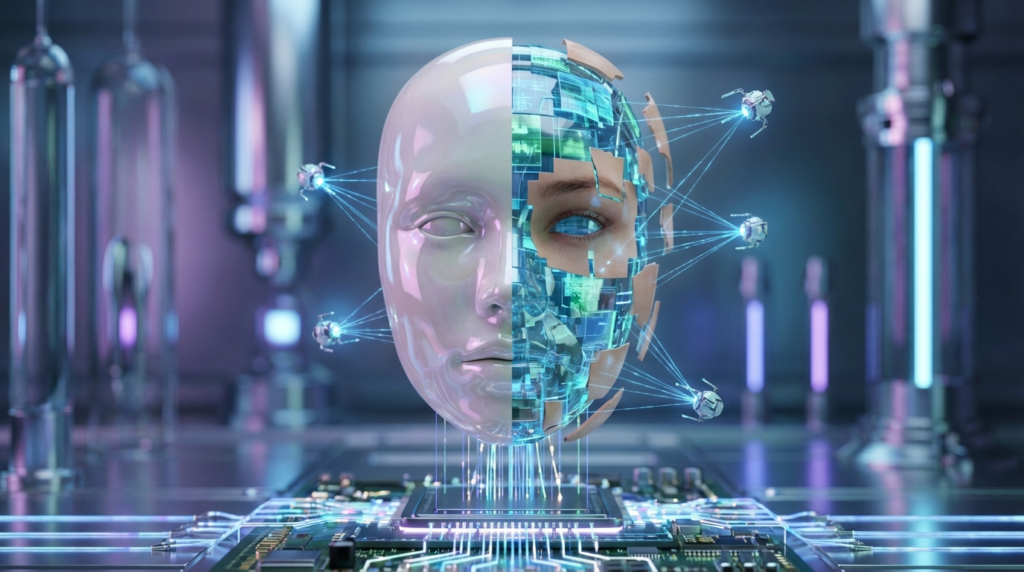
Deepfake technology uses Generative Adversarial Networks (GANs) and transformer models to create synthetic audio and video that impersonates specific individuals. The accessibility crisis makes this operationally dangerous: tools like ElevenLabs clone voices from 30 seconds of audio, while DeepFaceLab enables face-swapping with consumer hardware.
The $25.6M Hong Kong Attack Anatomy of Perfection:
Intelligence Phase (3-4 weeks):
- Identified finance clerk with wire transfer authorization
- Collected CFO and executive samples from earnings calls and conferences
- Analyzed meeting formats and authorization language
Execution (45 minutes):
- Multi-person video conference with deepfaked CFO and three executives
- Group consensus dynamics reinforced authenticity
- Video compression quality provided plausible cover for artifacts
- Authorized multiple transfers under manufactured urgency
Why It Succeeded:
- Authority bias from multiple “executives” presenting unified direction
- Video medium exploited trust in remote communication
- Time pressure prevented thorough verification
- Novel attack no framework for suspecting video deepfakes
Detection Technologies:
AI-Powered Tools:
- Intel FakeCatcher: Analyzes blood flow patterns in facial pixels via photoplethysmography (96% accuracy claim)
- Microsoft Video Authenticator: Detects blend boundary artifacts and inconsistencies (78% independent testing)
- Sentinel by Reality Defender: Enterprise platform integrating with Teams/Zoom for real-time detection
Behavioral Biometrics:
- Eye movement analysis: Deepfakes lack natural micro-saccades and human blink rates (15-20/min)
- Micro-expressions: Involuntary facial muscle contractions lasting 1/25-1/5 second difficult to synthesize
- Speech-gesture synchrony: Hand gestures unconsciously coordinated with speech rhythm
Audio Forensics:
- Frequency spectrum analysis (artifacts >8kHz)
- Background noise consistency evaluation
- Prosody and phase coherence examination
Blockchain Authentication (C2PA Standard):
- Cryptographic signatures embedded at content creation
- Tamper-evident chain of custody
- Requires ecosystem adoption (Adobe, Microsoft, Intel, Sony participating)
Critical Limitation: Detection is an arms race. State-of-the-art deepfakes from sophisticated adversaries can evade current detectors. Effective strategy uses detection as one layer, triggering verification protocols rather than sole decision factor.
QUICK-LOOK CASE STUDY: UK Energy Company Voice Deepfake ($243K): CEO received call from German parent company CEO (voice cloned from public interviews). Requested urgent €220K transfer for Hungarian supplier acquisition. Perfect accent, speech patterns, characteristic phrases. CEO complied. Detection: Third follow-up call triggered suspicion. Prevention: Mandatory callback protocol using known numbers.
Defense Implementation:
1. Out-of-Band Verification
- Mandatory protocols: Any financial request >$10K requires callback to corporate directory number
- Video call verification: High-stakes decisions require live confirmation with unpredictable challenge questions
- Code words: Pre-arranged phrases for urgent situations rotated quarterly
2. Watermarking & Signing
- S/MIME certificates on all corporate emails
- Live watermarking during sensitive video conferences
- Blockchain timestamping for critical communications
3. Detection Integration
- Deploy real-time deepfake detection on video platforms
- Combine with behavioral analytics (geographic impossibilities, timing anomalies)
- Flag high-risk communications for human review, not automated blocking
4. Incident Response
- Pre-positioned forensics capabilities and legal counsel
- 24/7 SOC or managed security service
- Law enforcement relationships (FBI IC3, Secret Service)
3. AI vs. AI Defensive NLP Detects the Undetectable
How NLP Identifies AI-Generated Attacks
Natural Language Processing (NLP) in cybersecurity deploys AI to analyze communication semantics, context, intent, and behavioral patterns using machines to counter machine-generated threats. Modern NLP security operates on transformer-based models (similar to GPT) trained on millions of confirmed phishing attempts and legitimate communications.
Detecting “Inhuman” Patterns:
1. LLM Fingerprints
- Repetitive structures: Overuse of parallel construction and formulaic transitions
- “Too perfect” grammar: Absence of typos, uniform punctuation density (humans make 2-3 errors per 200 words)
- Perplexity anomalies: AI-generated text shows lower “surprise” scores when analyzed by similar models
- Vocabulary consistency: Narrower lexical diversity than human equivalents
2. Stylometric Forensics
- Baseline comparison: Deviation from sender’s historical writing patterns (sentence length, punctuation habits, vocabulary)
- Example: CFO typically sends 50-word terse emails; 300-word perfectly punctuated message triggers alert regardless of AI signature
3. Sentiment & Intent Analysis
- Emotional manipulation detection: Abnormally high urgency/fear sentiment vs. sender baseline
- Pressure tactics: Time constraints, bypass protocol requests, consequence framing
- Intent classification: Identifying credential requests, action demands, verification schemes
4. Relationship Graph Analysis
- Communication networks: Mapping who typically emails whom, at what frequency, about which topics
- Anomaly detection: First-time communications, hierarchy violations (CEO→junior staff), domain violations (Finance discussing HR matters)
5. Contextual Validation
- Cross-referencing: Checking requests against calendars, project databases, financial systems
- Temporal impossibilities: References to events in wrong order or conflicting timelines
- Knowledge asymmetries: Information sender shouldn’t have or lacks expected knowledge
Ensemble Detection Architecture:
Real-Time Analysis Pipeline:
├─ Linguistic Classifier (AI generation signatures) → 15%
├─ Stylometric Classifier (sender baseline deviation) → 15%
├─ Behavioral Classifier (communication patterns) → 15%
├─ Contextual Validator (organizational knowledge) → 20%
├─ Intent Classifier (manipulation tactics) → 15%
├─ Email Authentication (SPF/DKIM/DMARC) → 20%
└─ Meta-Classifier combines scores → Risk: 0.0-1.0
Disposition:
├─ 0.0-0.3: Deliver normally
├─ 0.3-0.6: Deliver with warning
├─ 0.6-0.8: Quarantine, require acknowledgment
└─ 0.8-1.0: Block, notify security
QUICK-LOOK CASE STUDY: Regional Bank $2M Wire Transfer Prevented: VP received CFO email requesting $2.1M for “payment platform acquisition.” NLP flagged: 87% AI probability (low perplexity, zero errors), stylometric deviation (350 words vs. 75-word average), relationship anomaly (CFO doesn’t email VP directly), failed contextual validation (CFO in meeting during send time, no matching project in financial system). Risk Score: 0.89 (Critical). Email quarantined, callback revealed fraud. Result: $2.1M saved.
Key Platforms:
- Abnormal Security: Behavioral AI without signature-based rules
- Darktrace Antigena Email: Self-learning organizational baseline
- Proofpoint TAP: NLP combined with sandboxing and URL analysis
Performance Reality:
- Detection rate: 85-95% of AI-generated phishing
- False positive rate: 0.1-1% of legitimate email
- Limitation: Sophisticated attacks with human editing may evade; use as trigger for verification, not sole defense
4. The Human Element Zero Trust for the Deepfake Era
Why “Trust, But Verify” Is Dead
Zero Trust architecture applies the principle “never trust, always verify” to every access request, device, and communication. In the deepfake era, this must extend beyond network security to every voice call, video conference, and urgent request even from your boss.
The Psychological Shift:
Traditional security relied on sensory evidence: seeing someone’s face, hearing their voice. Deepfakes destroy this foundation. Organizations must build new trust architectures incorporating:
- Cryptographic verification over visual recognition
- Multi-factor authentication including knowledge-based challenges
- Procedural safeguards that don’t rely on communication medium authenticity
Why Zero Trust Should Extend to Your Boss’s Voice:
Voice and video are no longer authentication factors. When a live Zoom call could be a real-time deepfake, verification protocols become mandatory:
Video Conference Security:
- Challenge-response authentication: Ask unpredictable questions about recent shared experiences
- Out-of-band confirmation: For high-stakes requests, text/call using known contact to confirm
- Code word systems: Pre-arranged phrases for urgent situations
- Live watermarking: Display verification codes during sensitive calls
Implementation Framework:
1. Communication Verification Matrix
Request Type | Verification Required
─────────────────────|──────────────────────────────────
Routine (<$5K) | Email confirmation + supervisor CC
Significant ($5K-$50K)| Callback to known number
High-value (>$50K) | Dual channel + challenge question
Critical (>$250K) | In-person or dual executive approval
Credential changes | 24-hour delay + secondary device confirm
2. Security-Aware Culture
- Psychological safety: Normalize questioning suspicious requests without fear
- Celebrate catches: Reward employees who identify threats
- Remove stigma: Non-punitive response when employees report potential compromises
- Executive modeling: Leadership must embrace verification, not circumvent it
3. Employee Training
- Monthly simulations: Realistic deepfake and AI-phishing tests
- Role-specific modules: Enhanced training for finance, HR, executives
- Cognitive bias education: Understanding authority bias, urgency exploitation, reciprocity traps
- Reporting confidence: Clear escalation paths and immediate support
4. Continuous Authentication
- Behavioral biometrics: Typing patterns, mouse movements, device fingerprinting
- Impossible travel detection: Geographic/temporal anomalies
- Micro-segmentation: Least-privilege access limiting breach impact
QUICK-LOOK CASE STUDY: Manufacturing Deepfake Email+Voice Combo: AP manager received CFO email requesting $475K payment, instructed to “call my mobile.” Despite email warning (76% AI probability, baseline deviation), manager called number provided. Voice clone confirmed request. Security team’s voice analysis flagged deepfake (frequency artifacts, unnatural prosody). Callback to known CFO number revealed fraud. Prevention: $475K saved via layered verification.