From strategic dialogues with H.E. Dr. Mohamed Al Kuwaiti to dynamic vendor engagements across identity, OT, and exposure management, Saintynet Cybersecurity bridges global vendor capabilities with regional enterprise needs.
At GISEC 2026, the energy on the exhibition floor reflected a clear shift in how regional organizations view digital defense. Reactive security is no longer an option. As enterprises across the Middle East and Africa accelerate their digital transformation initiatives, security teams face an increasingly sophisticated threat environment one that demands tighter integration, stronger automation, and clearer visibility across complex environments.
Meeting these demands requires bridging the gap between global technology vendors and local operational needs. To address these challenges directly, system integration service provider Saintynet Cybersecurity
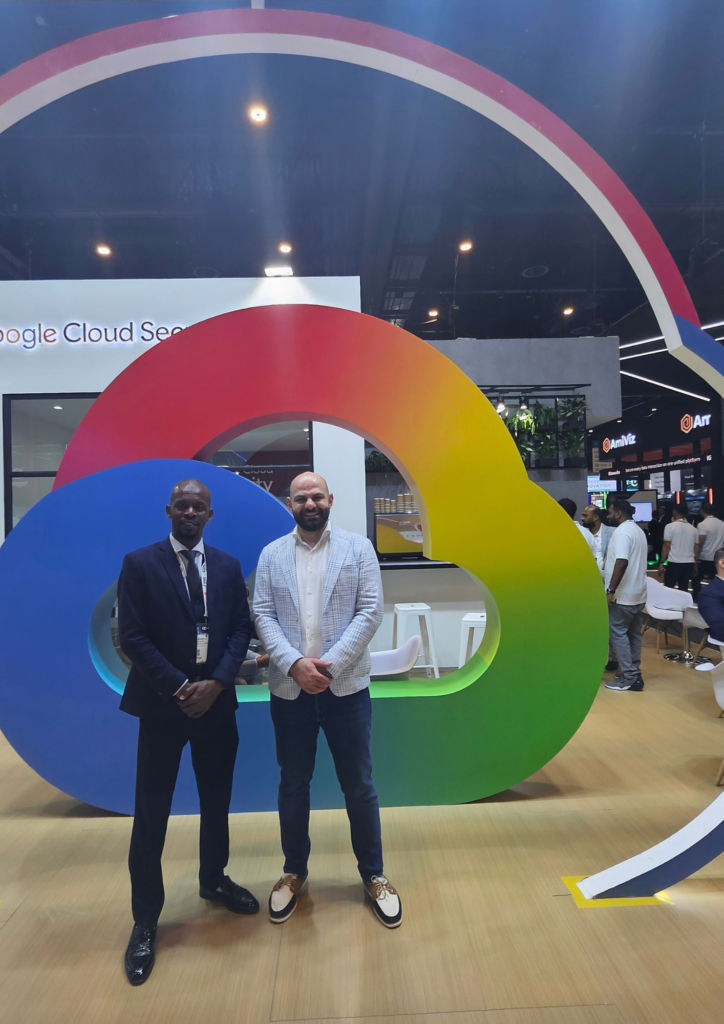
engaged in intensive, high-level discussions during the three-day event. Led by General Manager Ouaissou Dembele, Saintynet met with international cybersecurity leaders, technology innovators, and regional stakeholders to align global capabilities with the practical security requirements of MEA organizations.
Executive Leadership & National Cyber Vision
A primary highlight of Saintynet’s presence at GISEC 2026 was a bilateral meeting with H.E. Dr. Mohamed Al Kuwaiti, Head of the UAE Cyber Security Council. Dr. Al Kuwaiti has consistently supported regional technical leaders and ecosystem builders, advocating for public-private collaboration to strengthen national digital resilience.
┌──────────────────────────────────────────────────────────────────┐
│                    REGIONAL CYBER ECOSYSTEM                      │
│                                                                  │
│  [ UAE Cyber Security Council ]  ──► Policy & National Shield    │
│                 │                                                │
│                 ▼                                                │
│  [ Saintynet Cybersecurity ]     ──► Integration & Execution     │
│                 │                                                │
│                 ▼                                                │
│  [ Enterprise / Public Sector ]  ──► Resilient Digital Assets    │
└──────────────────────────────────────────────────────────────────┘
The UAE Cyber Security Council continues to drive regional standards, elevating threat intelligence sharing, establishing defense frameworks, and positioning the UAE as an international hub for secure digital innovation.
“Exchanging perspectives with H.E. Dr. Mohamed Al Kuwaiti reinforces our shared commitment to regional defense,” noted Ouaissou Dembele. “The UAE’s strategic leadership provides a clear benchmark for how national policy, vendor innovation, and specialized system integration must connect to protect critical assets.”
Strategic Partner Engagement Across Core Security Domains
Throughout GISEC 2026, Saintynet focused on evaluating technologies that directly address top client concerns, including identity management, cloud exposure, operational technology (OT) risks, and automated threat hunting.
                     SAINTYNET CYBERSECURITY GISEC MATRIX
  ┌─────────────────────────────────────────────────────────┐
  │ 1. IDENTITY & CODE ARCHITECTURE                         │
  │    • KOBIL (Identity Platform)                          │
  │    • Veracode (Application Security)                    │
  │    • Delinea (Privileged Access)                        │
  ├─────────────────────────────────────────────────────────┤
  │ 2. DATA GOVERNANCE & EXPOSURE CONTROL                   │
  │    • Varonis (Data Security)                            │
  │    • Seclore (Rights Management)                        │
  │    • OPSWAT (File Sanitization / CDR)                   │
  ├─────────────────────────────────────────────────────────┤
  │ 3. THREAT HUNTING & ADVANCED ANALYTICS                  │
  │    • Recorded Future (Threat Intel)                     │
  │    • Vectra AI (Network Detection)                      │
  │    • Qualys (Vulnerability Management)                  │
  └─────────────────────────────────────────────────────────┘
1. Workforce Capabilities & Human Resilience
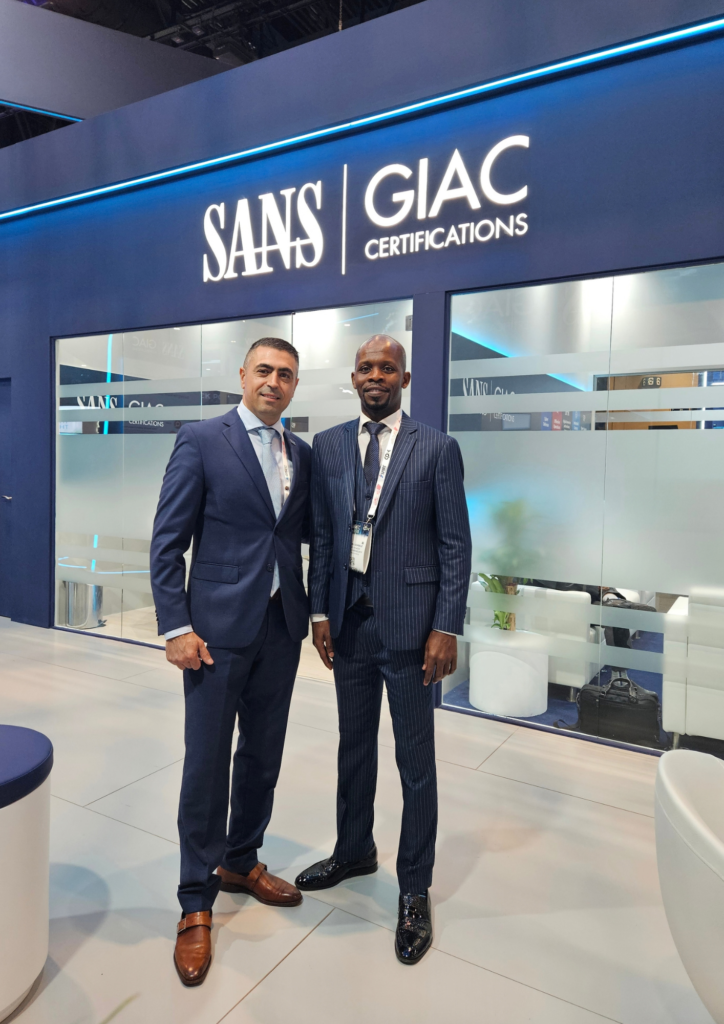
- SANS Institute: Focused on specialized technical training tracks and hands-on practitioner exercises designed to bridge the cyber skills gap across MEA financial and government sectors.
- Nashcon: Explored regional advisory, compliance consulting, and specialized security architecture services tailored for enterprise clients.
2. Enterprise Infrastructure & Network Defense
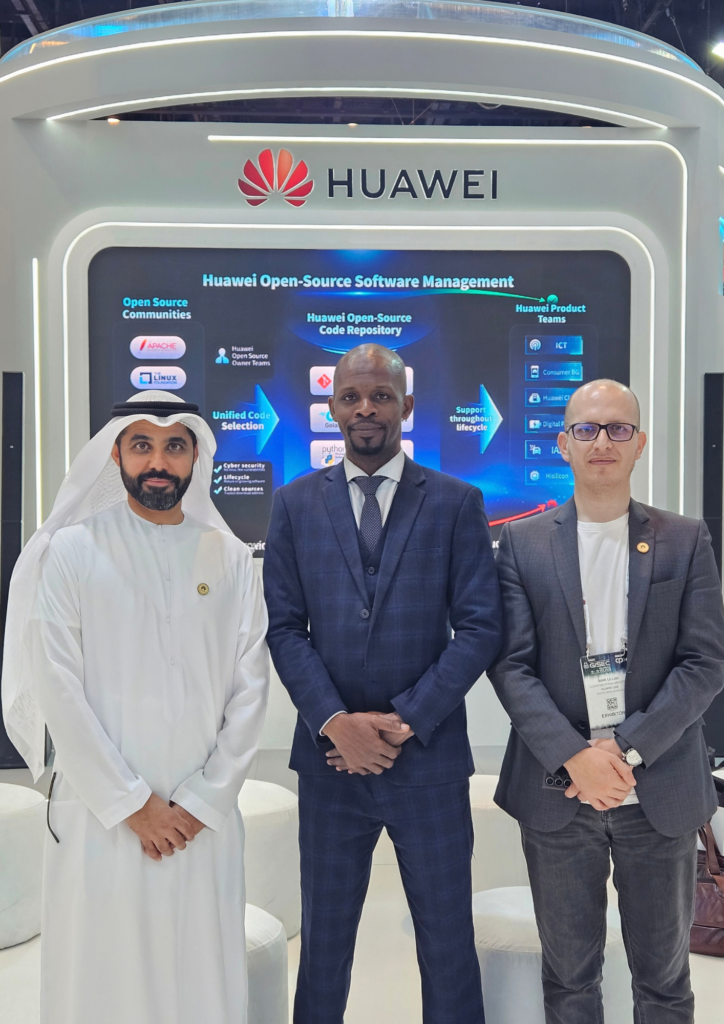
- Huawei: Discussed end-to-end cloud and network infrastructure security, focusing on resilience, zero-trust network architecture, and large-scale enterprise deployments.
- Forcepoint: Evaluated data-centric SASE architectures and user behavior analytics to prevent data loss across hybrid work environments.
- Check Point Software: Explored consolidated cloud-delivered prevention architectures designed to secure network perimeters and branch offices.
- Group-IB: Reviewed specialized threat intelligence, digital risk protection, and adversary tracking tailored to financial fraud prevention.
- Tata Communications: Evaluated managed global network security and secure SD-WAN infrastructure for multinational enterprises operating in MEA.
- SolarWinds: Discussed full-stack observability and IT service management security to safeguard hybrid operational environments.
3. Identity, Access, and Application Security
- KOBIL: Evaluated secure digital identity platforms, dual-factor authentication, and transaction signing for digital banking applications.
- Veracode: Reviewed developer-centric application security testing (SAST/DAST) to embed security into modern software delivery pipelines.
- Delinea: Explored Privileged Access Management (PAM) solutions designed to enforce authorization controls across hybrid cloud infrastructure.
- Harness: Examined secure CI/CD software delivery platforms to ensure governance and policy enforcement throughout the DevOps lifecycle.
- Xage Security: Analyzed zero-trust access controls and identity enforcement for operational technology (OT) and critical infrastructure environments.
4. Data Protection & Exposure Management
- Varonis: Focused on automated data security posture management (DSPM), classification, and suspicious activity detection within SaaS and on-premises stores.
- Seclore: Reviewed enterprise digital rights management (EDRM) to protect sensitive files and documents wherever they travel.
- OPSWAT: Evaluated Content Disarm and Reconstruction (CDR) and multi-engine file scanning to secure peripheral media and file upload channels.
- CloudSEK: Explored contextual digital risk monitoring to identify exposed assets, leaked credentials, and external attack surfaces.
- SpiderSilk: Reviewed attack surface management solutions designed to identify exposed assets and internet-facing vulnerabilities before exploitation.
5. Vulnerability Management & Threat Intelligence
- Qualys: Reviewed continuous vulnerability management, detection, and response (VMDR) platforms to maintain real-time asset visibility.
- Greenbone: Examined open-source and enterprise vulnerability assessment tools for continuous risk auditing.
- ThreatMon: Analyzed threat intelligence feeds and dark web monitoring tailored to track emerging threat actors targeting regional businesses.
- Recorded Future: Evaluated real-time threat intelligence integration across payment systems and enterprise defense teams.
- Forestall: Explored continuous automated red teaming and external attack surface posture analysis.
6. Threat Detection, Response, AI & Managed Defense
- Vectra AI: Evaluated AI-driven Network Detection and Response (NDR) to expose hidden attacker behaviors across cloud and hybrid networks.
- MavsAI: Reviewed enterprise AI governance and runtime security solutions to sanitize prompts, neutralize injection risks, and prevent sensitive data leakage across LLM interactions.
- Obrela: Reviewed Cyber Risk Management and SOC-as-a-Service capabilities, providing continuous operational monitoring.
- Exelixi AI: Discussed specialized AI engines designed to accelerate incident response and reduce security analyst fatigue.
- Black Box Series: Explored custom hardware security modules and secure processing units for sensitive operational setups.
- Secunet: Evaluated high-grade cryptographic solutions and government-certified security architectures.
- Advanica: Reviewed managed security operations and enterprise infrastructure monitoring services.
- Census Labs: Discussed specialized technical security auditing, penetration testing, and software vulnerability research.
- Mandarin Tech: Explored specialized AI solutions applied to threat correlation and telemetry analysis.
- QSE Corp: Evaluated strategic security consulting and compliance framework implementations.
- GreenMethod: Discussed enterprise risk management, security auditing, and compliance advisory services.
- Vornac: Reviewed emerging operational security solutions and threat exposure analysis tools.
The Executive Perspective: Operationalizing Vendor Innovation
                     SAINTYNET VALUE DELIVERABLE
  ┌─────────────────────────────────────────────────────────────┐
  │ GLOBAL VENDOR TECHNOLOGY   ──► Saintynet Regional Expertise  │
  │                                │                            │
  │                                ▼                            │
  │                     1. Strategic Advisory                   │
  │                     2. System Integration                   │
  │                     3. Certification Training               │
  └─────────────────────────────────────────────────────────────┘
Following three days of extensive discussions at GISEC, Ouaissou Dembele outlined the core takeaways for MEA security leadership:
“Technology availability is no longer the primary hurdle in cybersecurity—the challenge lies in proper integration and operational alignment,” said Dembele. “Organizations across our region do not need additional isolated tools; they need coherent, integrated security architectures that align directly with their business goals.
Our meetings at GISEC 2026 confirmed that vendor partners are eager to adapt their engineering strengths to local compliance and operational requirements. Saintynet serves as the bridge that converts these global technology capabilities into managed, compliant, and resilient systems for our clients.”
10 Actionable Guidance Steps for MEA Security Teams
To address emerging threats and technology trends highlighted at GISEC 2026, security leaders should prioritize the following actions:
- Audit Active Identity Controls: Enforce mandatory multi-factor authentication (MFA) across all remote access points and privileged accounts using modern, phishing-resistant protocols.
- Implement Content Disarm and Reconstruction (CDR): Sanitize incoming documents and file attachments at the gateway using tools like OPSWAT to neutralize hidden exploits before files reach end users.
- Establish Data Security Posture Management (DSPM): Automated classification platforms such as Varonis help identify, tag, and protect unstructured sensitive data stored in local or SaaS environments.
- Transition to Identity-Centric Zero Trust Access: Replace legacy perimeter VPNs with granular, risk-based access policies to limit lateral movement.
- Continuously Monitor External Attack Surfaces: Utilize exposure management platforms like SpiderSilk or CloudSEK to uncover forgotten subdomains, leaked API keys, and exposed cloud storage.
- Integrate Real-Time Threat Intelligence: Feed threat feeds directly into your SOC ecosystem to block known malicious infrastructure dynamically.
- Consolidate Application Security Pipelines: Embed static and dynamic scanning into CI/CD workflows using solutions like Veracode to resolve software flaws prior to deployment.
- Enforce Microsegmentation in Critical Infrastructure: Isolate operational technology (OT) environments from core corporate networks to protect industrial control systems.
- Automate Vulnerability Remediation: Prioritize vulnerabilities based on active exploit availability rather than relying solely on raw CVSS scores.
- Invest in Regular Practitioner Upskilling: Partner with specialized Saintynet Cybersecurity technical training programs to ensure internal staff are certified and equipped to defend modern environments.
About Saintynet Cybersecurity
is the dedicated cybersecurity division of Sainttly Group. Backed by over a decade of regional experience across the Middle East and Africa, Saintynet provides:
- End-to-End Cybersecurity Services: Strategic advisory, system integration, SOC deployment, and compliance audits.
- Product Reselling & Architecture: Authorized distribution and integration of leading global technology solutions.
- Certification Training: Professional technical upskilling and corporate awareness programs via saintynet.com, email: training@saintynet.com (English) formation@saintynet.com (French).
To explore strategic partnerships, request a security assessment, or review implementation frameworks, contact Saintynet Cybersecurity today at partner@saintynet.com for vendors and saintynet@saintynet.com organizations.